It's been used in traditional Chinese and Ayurvedic medicine for thousands of years. But only in the last two decades has modern science begun to understand why berberine works — and the answer turns out to be surprisingly profound.
Berberine isn't a trendy wellness ingredient. It's a bioactive compound with a well-documented mechanism of action, a growing body of peer-reviewed research, and a mounting case for its role in healthy aging. As interest in longevity science moves from niche to mainstream, berberine has quietly become one of the most studied compounds in the field.
Here's what the research actually says — and why it matters for how you age.
What Is Berberine?

Image from Tally Health
Berberine is a naturally occurring alkaloid found in several plants, including barberry (Berberis vulgaris), goldenseal, Oregon grape, and tree turmeric. It has a long history of use in traditional medicine, most commonly for its antimicrobial and metabolic effects.
What distinguishes berberine from many plant-derived compounds is the depth of its molecular pharmacology. Unlike some natural ingredients whose mechanisms remain poorly understood, berberine has a well-characterized primary target: AMPK, or AMP-activated protein kinase.
That single mechanism — AMPK activation — opens the door to a wide range of downstream effects that researchers are now linking directly to longevity.
Berberine and AMPK: The Longevity Connection

Image from Tally Health
AMPK is sometimes called the body's metabolic master switch. It's an enzyme present in virtually every cell that acts as an energy sensor — detecting when cellular energy (ATP) is low and triggering a cascade of compensatory responses.
When AMPK is activated, several things happen:
Glucose uptake increases — cells pull more glucose from the bloodstream for energy
Fat oxidation accelerates — the body shifts toward burning stored fat
Autophagy is stimulated — the cellular cleanup process that removes damaged proteins and organelles
mTOR is inhibited — a nutrient-sensing pathway that, when chronically elevated, is associated with accelerated aging
Mitochondrial biogenesis is promoted — the creation of new, efficient mitochondria
This profile looks remarkably similar to what happens during caloric restriction and exercise — two of the most robustly proven longevity interventions in biology. Berberine has been described in the scientific literature as a caloric restriction mimetic: a compound that activates some of the same molecular pathways as fasting and exercise, without requiring either.
That's a significant claim — and it's backed by a meaningful body of evidence.
What the Research Says About Berberine and Aging

Image from Tally Health
Lifespan Extension in Model Organisms
Some of the most striking berberine research comes from animal studies. In C. elegans (a widely used model organism in aging research), berberine has been shown to extend lifespan by up to 21%, with effects mediated through pathways including AMPK activation and mitochondrial improvement.
In mouse studies, berberine supplementation has been associated with extended lifespan, reduced markers of cellular aging, and improved physical function in older animals — with one study demonstrating that berberine regulated the expression of p16 and cyclin proteins associated with cellular senescence, effectively slowing the accumulation of aging "zombie cells".
Human research is still maturing, but the mechanistic overlap between berberine's effects and established longevity pathways provides a thoughtful scientific rationale for its use.
Berberine and Cellular Senescence
Cellular senescence — the process by which damaged cells stop dividing but resist programmed cell death — is now recognized as one of the key drivers of aging. Senescent cells accumulate with age and secrete pro-inflammatory signals that damage surrounding tissue, accelerating the aging process throughout the body.
Research suggests berberine may have senolytic and senomorphic properties — meaning it may both help clear senescent cells and suppress the inflammatory signals they release. This potentially positions berberine alongside quercetin and fisetin in the emerging class of compounds targeting one of aging's most consequential mechanisms.
Berberine and Metabolic Health
Berberine's most extensively studied effects are metabolic — and metabolic health is deeply intertwined with aging biology.
Human research has reported that berberine significantly reduced fasting blood glucose, HbA1c, and fasting insulin in people with type 2 diabetes, with a safety and efficacy profile comparable to metformin. Metformin — a diabetes drug also being studied for its longevity effects in the Targeting AGing With Metformin (TAME) trial — works in part through similar AMPK-activating mechanisms.
Key metabolic findings reported across berberine research include:
Fasting blood glucose reduction — consistently observed across multiple trials
Improved insulin sensitivity — reducing the metabolic dysfunction associated with accelerated =aging
LDL cholesterol reduction — berberine reportedly inhibits an enzyme (PCSK9) that regulates LDL receptor degradation, improving cardiovascular risk markers
Triglyceride reduction — relevant to both metabolic and cardiovascular aging
Body weight and visceral fat reduction — through a combination of metabolic rate improvement and appetite regulation
Chronic metabolic dysfunction — elevated blood sugar, insulin resistance, and visceral adiposity — is strongly associated with accelerated aging. By addressing these upstream drivers, berberine may help slow one of the most common pathways through which people age faster than they should.
Berberine and Mitochondrial Function
Mitochondrial dysfunction is one of the 12 hallmarks of aging. As mitochondria accumulate damage over time, cellular energy production drops, oxidative stress rises, and the tissues that depend most on mitochondrial output — heart, brain, muscle — begin to falter.
Berberine has been shown to support mitochondrial health through several mechanisms:
Stimulating mitophagy — the selective recycling of damaged mitochondria, keeping the mitochondrial pool healthier
Promoting mitochondrial biogenesis — the creation of new mitochondria via PGC-1α activation
Reducing mitochondrial oxidative stress — lowering the reactive oxygen species (ROS) that accumulate with age
This makes berberine a potentially valuable tool not just for metabolic health, but for the energy and physical performance dimensions of aging that matter to quality of life.
Berberine and the Gut Microbiome
One emerging and particularly interesting aspect of berberine research involves the gut microbiome — the community of microorganisms whose composition is increasingly linked to aging, immunity, and metabolic health.
Research suggests berberine may reshape the gut microbiome in beneficial ways: increasing the abundance of short-chain fatty acid-producing bacteria, reducing populations associated with metabolic dysfunction, and improving the gut barrier integrity that tends to degrade with age. Some researchers now believe that gut microbiome modulation may be a significant mechanism behind berberine's broader effects.
Berberine and Cognitive Health
Cognitive decline is one of the most feared dimensions of aging — and berberine's effects on brain health are an active area of research.
Animal studies have shown berberine to improve memory and learning in models of cognitive impairment, with proposed mechanisms including reduced neuroinflammation, improved cerebral blood flow, and neuroprotective effects against amyloid accumulation. Human research in this area is preliminary, but the mechanisms are biologically plausible and consistent with berberine's broader anti-inflammatory and metabolic profile.
Berberine vs. Metformin: How Do They Compare?

Image from Tally Health
Metformin is the world's most prescribed diabetes drug and is now one of the most discussed compounds in longevity science, largely due to its AMPK-activating properties and epidemiological evidence linking its use to reduced all-cause mortality.
Berberine and metformin share several mechanisms — both activate AMPK, both improve glucose metabolism, and both show anti-aging effects in preclinical models. Research directly comparing the two found broadly similar efficacy for glycemic control.
Key distinctions:
Metformin requires a prescription; berberine is available as a supplement
Metformin's long-term safety profile in non-diabetic populations is still being studied; berberine has a centuries-long history of use
Berberine has additional mechanisms (gut microbiome modulation, mitochondrial effects via pathways distinct from metformin) that may offer complementary benefits
Some researchers suggest the two may be synergistic rather than interchangeable
Neither should be approached as a substitute for the other without medical guidance — but berberine's accessibility makes it one of the more practically available longevity compounds for people who aren't managing diabetes.
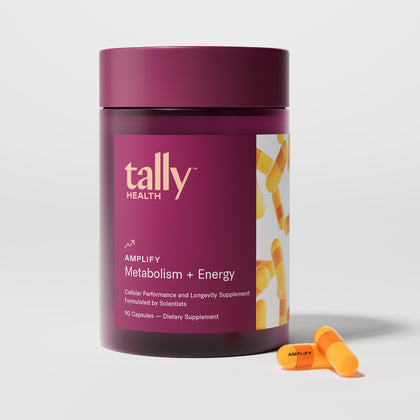
How Tally Health Uses Berberine in Amplify

Image from Tally Health
Tally Health's a supplement was formulated specifically around metabolic health and cellular energy — the two domains where berberine's evidence is strongest.
Amplify delivers 600mg of berberine per daily serving, alongside two complementary compounds designed to work synergistically:
Glycine (1,000mg) — the primary ingredient; extensively studied for its ability to promote autophagy and support cellular cleanup, extending lifespan in complex model organisms
Coenzyme Q10 (200mg) — a critical cofactor in mitochondrial energy production that declines significantly with age; supplementation aims to support the mitochondrial function berberine helps promote
Together, these three ingredients target what Tally describes as established hallmarks of aging: promoting autophagy, activating AMPK, and improving mitochondrial function — working in concert rather than in isolation.
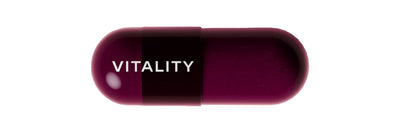
The formulation is vegan, non-GMO, and gluten-free, and is designed to complement Tally's foundational supplement Vitality. Where Vitality targets sirtuins and cellular defense pathways, Amplify focuses on the metabolic and energy dimensions of aging — making them a scientifically adjacent pairing for people looking to address multiple longevity pathways simultaneously.
Suggested use is three capsules daily, taken with food.
Who Might Benefit Most From Berberine?
Based on the research, berberine's effects appear most pronounced in people with:
Metabolically suboptimal — difficulty controlling blood sugar and appetite
Declining energy levels — particularly in the context of mitochondrial aging
Interest in caloric restriction benefits without fasting protocols
That said, the mechanisms through which berberine operates — AMPK activation, autophagy, mitochondrial support — are relevant to aging biology broadly, not just in metabolic disease. Many of the longevity-oriented benefits are being observed in populations without clinical metabolic dysfunction.
As with any supplement, berberine is not appropriate for everyone. People taking medications for diabetes or blood pressure should consult a healthcare provider before adding berberine, as additive effects on blood glucose and blood pressure are possible.
Practical Considerations: Dosing, Timing, and Absorption

Image from Tally Health
Dosing: Most clinical research on berberine's metabolic effects has used doses of 500–1,500mg per day, often divided across meals. Tally's Amplify provides 600mg per serving — within the studied range and calibrated for daily use.
Timing: Berberine is best taken with food, both to reduce the mild gastrointestinal effects some people experience and to align its glucose-lowering effects with meals.
Absorption: Pairing berberine with food (particularly a fat-containing meal) likely supports uptake.
Onset: Metabolic effects — blood sugar metabolism and energy shifts — are typically observed within 4–8 weeks of consistent use. Longer-term effects on aging markers likely require months of sustained supplementation.
The Bottom Line on Berberine for Longevity

Image from Tally Health
Berberine is not a supplement that works by vague, unmeasurable mechanisms. Its primary pathway — AMPK activation — is one of the most studied and well-validated targets in longevity biology, and its downstream effects on metabolism, mitochondria, cellular senescence, and the gut microbiome represent a meaningful constellation of aging-relevant actions.
The research is still evolving, particularly in humans over the long term. But the mechanistic case for berberine as a longevity-supporting compound is among the strongest available in the supplement landscape — and its safety profile, derived from both traditional use and modern clinical research, makes it one of the more practical tools for people serious about aging well.
Small consistent habits, compounded over time, move the needle on biological age. Berberine — formulated well, dosed appropriately, and paired with a way to measure outcomes — is one of the more evidence-grounded ways to add to that stack.
References
Bei et al. Berberine Extends Lifespan in C. elegans Through Multi-Target Synergistic Antioxidant Effects. Antioxidants (Basel) 2025.
Dang et al. Berberine ameliorates cellular senescence and extends the lifespan of mice via regulating p16 and cyclin protein expression. Aging Cell 2020.
Navrotskaya et al. Berberine Prolongs Life Span and Stimulates Locomotor Activity of Drosophila melanogaster. Am J Plant Sci 2012.
Xiao et al. Berberine extends healthspan and delays neurodegenerative diseases in Caenorhabditis elegans through ROS-dependent PMK-1/SKN-1 activation. Arch Gerontol Geriatr 2025.
Thukral et al. Taurine and Berberine: Nutritional Interventions Targeting Cellular Mechanisms of Aging and Longevity. Cardiol Rev 2025.
Zhao et al. Berberine is an insulin secretagogue targeting the KCNH6 potassium channel. Nat Commun 2021.
Shi et al. Berberine and health outcomes: an overview of systematic reviews. BMC Complement Med Ther 2025.
Asbaghi et al. The effect of berberine supplementation on obesity parameters, inflammation and liver function enzymes: A systematic review and meta-analysis of randomized controlled trials. Clin Nutr ESPEN 2020.