Metformin has spent the last fifteen years as longevity science's most famous repurposed drug — a $4-a-month diabetes medication some researchers hoped might delay aging itself. The evidence on metformin and aging looked compelling for a long time. Lately, it's gotten a lot more complicated.
That's not a knock on metformin, which remains one of the safest, most effective medications for type 2 diabetes ever developed. It's a reflection of how longevity science is supposed to work: a hypothesis gets tested rigorously, and sometimes the newer, better-controlled data doesn't confirm what the earlier, messier data suggested. Metformin is currently in the middle of that correction. Here's the actual state of the evidence, mechanism by mechanism, so you can separate what's established from what's still speculative.
How a Diabetes Drug Became Longevity's Favorite Candidate

Image from Tally Health
Metformin has been prescribed for type 2 diabetes since the 1950s in Europe and 1994 in the U.S., which means researchers have decades of safety data and hundreds of millions of patient-years to study. That's rare in drug research, and it's part of why metformin got so much attention outside of diabetes care.
The interest started with an observation: in several large studies, diabetics taking metformin appeared to live as long as, or longer than, non-diabetic people who weren't taking any glucose-lowering drug at all. That's a strange result — diabetes itself accelerates aging-related disease, so a diabetes drug outperforming healthy controls suggested metformin might be doing something beyond blood sugar control. That single observation launched a decade of mechanistic research and eventually the TAME trial, the first clinical trial explicitly designed to test whether a drug can slow aging as a process, rather than treat one disease at a time.
Tally Health exists in part because of this kind of question — not "does this drug feel like it's working," but "what does it actually do to a validated marker of biological aging." That's the same standard this post holds metformin to.
The Cellular Case for Metformin as a Geroprotector
Metformin's mechanisms genuinely do overlap with several recognized hallmarks of aging, which is why it earned its reputation in the first place.
AMPK activation: Metformin activates AMP-activated protein kinase, a master switch that senses low cellular energy and responds by dialing up glucose uptake and fat burning while dialing down energy-expensive growth processes. Think of AMPK as your cell's low-battery alert — it reroutes resources toward maintenance instead of expansion. Berberine, a plant-derived compound sometimes nicknamed "nature's metformin," activates this same AMPK pathway through a different molecular route — which is part of why researchers studying metabolic aging keep the two compounds in the same conversation, even though they aren't interchangeable.
mTOR inhibition: By activating AMPK, metformin indirectly suppresses mTOR, a growth-signaling pathway that, when chronically overactive, is linked to faster cellular aging. Reduced mTOR signaling is one of the most consistent findings across every organism where scientists have successfully extended lifespan, from yeast to mice.
Reduced inflammation and senescence: Observational and animal data suggest metformin lowers markers of chronic low-grade inflammation, sometimes called "inflammaging," and may reduce the buildup of senescent cells — old, dysfunctional cells that stop dividing but linger anyway, secreting inflammatory signals into surrounding tissue.
These mechanisms are real and well-documented at the cellular level. The open question has always been whether they translate into a measurable slowdown of aging in a whole, living human — and that's exactly the harder question the newest research has been testing.
The TAME Trial: Still the Headline, Still Unanswered

Image from Tally Health
Most articles about metformin and longevity lead with the TAME (Targeting Aging with Metformin) trial, and for good reason — it's the study designed to settle this. TAME proposes enrolling roughly 3,000 adults aged 65 to 79 without diabetes, tracking whether metformin delays a composite of cardiovascular disease, cancer, dementia, and death compared to placebo over several years.
Here's the part that gets left out of a lot of coverage: as of 2026, TAME still has not launched at full scale due to ongoing funding needs, and it has no published efficacy results. It remains, in AFAR's own description, a fully designed and ready trial — not a completed one. Every headline suggesting TAME has "shown" metformin slows aging is getting ahead of a trial that hasn't reported primary results.
That distinction matters. It means the strongest possible evidence for metformin as an anti-aging drug in humans doesn't exist yet. Everything else — the mouse studies, the observational cohorts, the mechanistic papers — is suggestive, not conclusive.
The New Data Complicating the Story

Image from Tally Health
While TAME waits on funding, several other studies have quietly filled in the picture — and they haven't been kind to the "metformin as a universal longevity drug" framing.
Metformin and Exercise Don't Always Get Along
This is arguably the most important recent finding for anyone taking metformin who also exercises for healthspan. Multiple controlled trials in older adults have found that adding metformin to an aerobic exercise program blunts the very adaptations exercise is supposed to produce.
In a randomized, placebo-controlled trial, older adults who took metformin during 12 weeks of aerobic training showed a smaller increase in VO2 max and a blunted rise in skeletal muscle mitochondrial respiration compared to those on placebo — even though both groups exercised identically. A related trial found metformin blunted muscle hypertrophy in older adults doing resistance training, and follow-up transcriptomic analysis showed metformin dampened the gene-expression changes that resistance training normally triggers in muscle tissue.
The proposed mechanism is almost ironic: metformin partly works by mildly inhibiting Complex I of the mitochondrial electron transport chain, creating a low-grade energy stress that activates AMPK. Exercise creates a similar energy stress to trigger its own adaptations. When both signals compete for the same mitochondrial pathway, metformin appears to dull the exercise signal rather than amplify it — the opposite of what most people assume when stacking a "longevity drug" with a "longevity habit."
The Mouse Data Was Never as Clean as the Headlines
The National Institute on Aging's Interventions Testing Program is the gold standard for testing whether a compound extends lifespan in genetically diverse mice, and its metformin results are more mixed than most summaries suggest. In several ITP cohorts, metformin alone did not significantly extend lifespan using the program's primary statistical test. Metformin combined with rapamycin has shown a lifespan benefit in some cohorts, but that combination's advantage over rapamycin alone hasn't consistently reached statistical significance either. An earlier, widely cited paper reporting a 4–6% lifespan increase in mice used doses and analysis methods that later, more rigorous multi-site testing hasn't fully reproduced.
None of this means metformin does nothing in mouse models — a 2024 reanalysis using a statistical test more sensitive to early-life mortality did find a lifespan signal in male mice. But "significant in males, using a secondary statistical test, in a reanalysis" is a meaningfully different claim than "extends lifespan," and it's worth knowing which one is actually supported.
Real-World Follow-Up Data Is Mixed, Not Glowing
Some human data still looks favorable — an analysis of the Women's Health Initiative found postmenopausal women started on metformin had a lower risk of dying before age 90 compared to those started on a different diabetes drug, sulfonylureas. That's a meaningful, sex-specific signal worth taking seriously.
But two other recent findings pull the other direction. A 21-year follow-up of the Diabetes Prevention Program found that metformin was not significantly different from placebo in reducing multimorbidity risk in adults with prediabetes — intensive lifestyle intervention was the factor that mattered. And a trial testing metformin in older adults with sarcopenia and frailty found four months of the drug did not improve strength, walking speed, or quality of life, with worse tolerability than placebo.
Put together, the pattern is: metformin still looks genuinely protective in people who have insulin resistance or diabetes, which is exactly the population it was built for. In metabolically healthy people, or in frail older adults hoping it will preserve muscle and function, the newer trials aren't backing up the earlier enthusiasm.
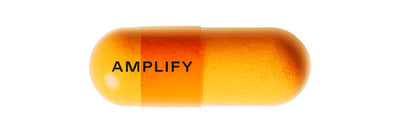
Amplify, Tally's metabolism and energy supplement, was built around this same insight — that AMPK activation, mitochondrial support, and blood sugar regulation matter most as a foundation for people actively managing metabolic health, not as a blanket anti-aging strategy layered onto an already healthy metabolism. It's part of why Amplify includes berberine alongside CoQ10 and glycine: berberine engages the same AMPK signaling metformin relies on, making it a potential option for people building a metabolic-health routine rather than managing a diabetes diagnosis.
So Where Does That Leave Metformin?

Image from Tally Health
If you have type 2 diabetes, prediabetes, or documented insulin resistance, metformin remains one of the best-supported medications you can take — the cardiovascular and mortality benefits in that population are real and long-established. That has not changed.
What has changed is the confidence with which anyone should describe metformin as an anti-aging drug for a metabolically healthy person. The mechanistic story is still plausible. The TAME trial, if it launches and reports results, could still validate it. But right now, in 2026, the honest summary is: promising hypothesis, unproven in the population most interested in taking it preventively, and potentially counterproductive if you're relying on structured exercise as your primary longevity strategy.
This is a case where "what a drug does in a petri dish" and "what a drug does in your specific 45-year-old, exercising body" turned out to be two different questions — and the science had to catch up to tell the difference.
Track What Metformin (or Any Intervention) Is Actually Doing to Your Aging

Image from Tally Health
The metformin story is a good argument for measuring outcomes instead of trusting a mechanism to translate the way you'd expect. Cellular pathways are a reasonable starting hypothesis; they're not proof of what's happening in your own tissue.
The TallyAge® Test measures your biological age from a simple at-home cheek swab, using a proprietary epigenetic clock trained on one of the largest buccal-tissue DNA datasets available. It reads roughly 200,000 DNA methylation sites to estimate how your lifestyle, medications, and habits are actually showing up at the cellular level — independent of what any single intervention is supposed to do in theory.
Within 12 months, more than 62% of Tally Health members lowered their epigenetic age by an average of 2.34 years. If you're taking metformin, training for a marathon, or doing both, that's a more direct answer than any single study can give you. See what your biological age says about your metabolic health.
References
Barzilai et al. Metformin as a Tool to Target Aging. Cell Metab 2016.
Walton et al. Metformin blunts muscle hypertrophy in response to progressive resistance exercise training in older adults: A randomized, double-blind, placebo-controlled, multicenter trial: The MASTERS trial. Aging Cell 2019.
Strong et al. Longer lifespan in male mice treated with a weakly estrogenic agonist, an antioxidant, an α-glucosidase inhibitor or a Nrf2-inducer. Aging Cell 2016.
Bannister et al. Can people with type 2 diabetes live longer than those without? A comparison of mortality in people initiated with metformin or sulphonylurea monotherapy and matched, non-diabetic controls. Diabetes Obes Metab 2014.
Keys et al. Reassessing the evidence of a survival advantage in Type 2 diabetes treated with metformin compared with controls without diabetes: a retrospective cohort study. Int J Epidemiol 2022.
Recommended Supplements
Does metformin actually slow aging in humans?
There's no completed clinical trial proving this yet. The TAME trial was designed to answer that question directly but has not launched at full scale or reported results as of 2026. Current human evidence is mostly observational and strongest in people who already have diabetes or prediabetes, not in metabolically healthy adults.
Should I take metformin for longevity if I don't have diabetes?
Most current research doesn't support this. Recent trials have found no meaningful benefit for frailty or multimorbidity in non-diabetic populations, and metformin can blunt some benefits of exercise training. This is a decision to make with a doctor based on your individual metabolic profile, not a general longevity recommendation.
Does metformin interfere with exercise benefits?
In multiple controlled trials, yes — metformin blunted improvements in cardiorespiratory fitness, mitochondrial respiration, and muscle hypertrophy in older adults doing aerobic or resistance training. The proposed mechanism involves metformin and exercise both acting on the same mitochondrial energy-stress pathway.
Is berberine a natural alternative to metformin?
Berberine activates the same AMPK pathway as metformin, which is why it's sometimes called "nature's metformin," but it's not a proven substitute — the two compounds differ in potency, bioavailability, and the depth of clinical trial data behind them. Berberine is better understood as a foundational AMPK-support ingredient than a metformin equivalent.