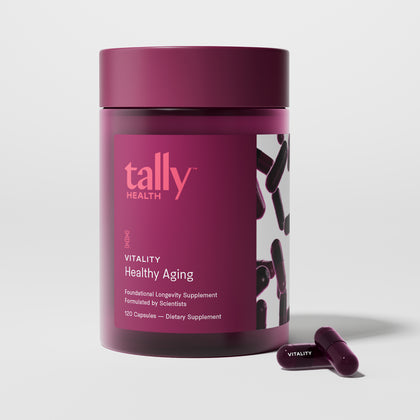
Chronic loneliness is linked to higher rates of heart disease, cognitive decline, and premature mortality, and is associated with elevated stress hormones that can accelerate biological aging.

Science-backed tools designed to improve your healthspan and longevity.
Valentine’s Day tends to focus on romance—but the science of longevity tells a broader (and more interesting) story. Love, connection, and meaningful relationships don’t just make life sweeter. They may help us live longer, healthier lives.
A growing body of research shows that social connection is a powerful driver of healthspan—the number of functional years we live in good physical and cognitive health. From romantic partnerships to friendships and community ties, connection shapes how we age at a biological level.
Humans are social by design. Across evolution, survival depended on cooperation, caregiving, and shared responsibility. That evolutionary wiring still influences our biology today.
Research across species shows that animals that form strong social bonds—especially those that care for their young—tend to live longer. These bonds appear to reduce stress, increase resilience, and support healthier aging processes.
In humans, social connection influences immune function, cardiovascular health, metabolism, and brain health. Chronic loneliness, by contrast, is now recognized as a serious health risk—linked to higher rates of heart disease, cognitive decline, and premature mortality.
Romantic relationships have been studied extensively in longevity research, particularly in older adults. Large population studies show that being married or in a long-term partnership is associated with longer life expectancy, especially later in life.
The protective effects likely stem from several factors:
Reduced chronic stress and improved emotional regulation
Greater likelihood of healthy routines, such as regular meals, movement, and sleep
Increased engagement with preventive healthcare
Importantly, it’s not the marriage certificate itself conferring these benefits—it’s the presence of stable, supportive relationships. Relationship quality consistently predicts better health outcomes than relationship status alone.
Romantic love is only one piece of the longevity puzzle. Broader social networks—friends, family, neighbors, and community—also play a critical role in healthy aging.
Studies show that older adults with stronger social networks live longer and spend more years free from disability. Higher social network scores are associated with:
Increased overall life expectancy
Longer disability-free life expectancy
Better cognitive and emotional health
In other words, staying socially connected doesn’t just add years to life—it helps preserve independence, mobility, and mental clarity as we age.
How does social connection translate into measurable biological benefits?
One key pathway is stress regulation. Loneliness and social isolation are associated with chronically elevated cortisol levels. Over time, excess cortisol can:
Increase inflammation
Disrupt glucose metabolism
Impair immune function
Accelerate biological aging
Positive social interactions help activate the parasympathetic nervous system—the body’s “rest and restore” mode—supporting lower inflammation, healthier cardiovascular function, and improved metabolic resilience.
Emerging research also suggests that social connection may influence gene expression related to immune response and inflammation, offering a potential link between relationships and cellular aging.
Modern wellness culture often frames health as an individual pursuit—optimize your diet, your workouts, your supplements. But the science of longevity paints a different picture.
Shared meals, meaningful conversations, physical affection, social support, and a sense of belonging all support long-term health. Even simple habits—walking with a friend, checking in regularly with loved ones, participating in group activities—can reinforce biological systems that protect healthspan.
This may explain why lifestyle changes that include social elements, like group exercise or communal meals, tend to be more sustainable and effective over time.
Supporting your social health doesn’t require a packed calendar. Research suggests quality matters more than quantity. Small, consistent actions can have an outsized impact:
Prioritize regular connection with people you trust
Pair movement with social time, such as walking or exercising together
Maintain simple rituals, like shared meals or weekly check-ins
Stay engaged in community activities, hobbies, or volunteering—especially later in life
These habits support emotional well-being while strengthening the biological foundations of healthy aging.
Valentine’s Day may come once a year, but the benefits of connection extend far beyond a single holiday. Longevity isn’t just about adding years to life—it’s about preserving vitality, resilience, and independence over time.
Nutrition, movement, sleep, and metabolic health are essential pillars of healthy aging. But relationships are the connective tissue that makes those habits sustainable and effective.
At Tally Health, we believe longevity is holistic—supporting your cells, your metabolism, and your everyday life. Because the healthiest future isn’t just longer. It’s more connected, more resilient, and deeply human.
Social connection is a powerful driver of healthspan and is linked to longer life expectancy, better immune function, cardiovascular health, metabolism, and brain health.
Chronic loneliness is linked to higher rates of heart disease, cognitive decline, and premature mortality, and is associated with elevated stress hormones that can accelerate biological aging.
Large population studies show that being married or in a long-term partnership is associated with longer life expectancy, especially later in life, largely due to stable, supportive relationships.
Becofsky et al. Influence of the Source of Social Support and Size of Social Network on All-Cause Mortality. Mayo Clin Proc 2015; https://doi.org/10.1016/j.mayocp.2015.04.007
Mookadam and Arthur. Social support and its relationship to morbidity and mortality after acute myocardial infarction: systematic overview. Arch Intern Med 2004; https://doi.org/10.1001/archinte.164.14.1514
Betesh-Abay et al. Social Support and 10-Year Mortality Following Acute Myocardial Infarction. J Cardiovasc Dev Dis 2025; https://doi.org/10.3390/jcdd12040147
Wang and Yi. Marital status and all-cause mortality rate in older adults: a population-based prospective cohort study. BMC Geriatr 2023; https://doi.org/10.1186/s12877-023-03880-8
Manvelian and Sbarra. Marital Status, Close Relationships, and All-Cause Mortality: Results From a 10-Year Study of Nationally Representative Older Adults. Psychosom Med 2020; https://doi.org/10.1097/psy.0000000000000798
1,000mg
600mg
200mg

500mg
90mg
30mg
11mg
1000IU

1000mg
250mg
200mg
50mg

1000mg
200mg
1.7mg
400mcg DFE
2.4mcg

1,000mg
500mg
500mg
50mg
900mcg