Totals exclude applicable state/local taxes. Cart contains recurring purchase. You will be charged $0.00 today. Future recurring charges and billing intervals are shown at checkout. Subscriptions continue until cancelled. Contact Tally Support for additional details.
The Longevity Food Pyramid: How to Build a Diet That Supports Healthspan
Published:
Longevity-based nutrition isn’t about chasing the latest diet trend or eliminating entire food groups. It’s about structuring what you eat most often to support long-term metabolic health, cellular resilience, and protection against chronic disease.
At Tally Health, we think of nutrition as a foundation for healthspan—the years of life spent feeling strong, sharp, and energized. Instead of rigid rules, the Longevity Food Pyramid is a practical way to organize your grocery list, pantry, and plate around foods that modern nutrition science consistently links to better long-term health.
The Foundation: Eat Real Foods Most Often
Image from Tally Health
The base of a longevity-based diet is simple: eat real, whole food.
These are foods that are close to their natural form, minimally processed, and rich in essential nutrients. They should make up the majority of what you buy, cook, and eat.
Longevity-supportive staples include:
Vegetables and fruits
Whole grains like brown rice, whole wheat, oats, and quinoa
Beans, lentils, and other legumes
Nuts and seeds
These foods provide fiber, vitamins, minerals, and naturally occurring compounds that support digestion, blood sugar regulation, and immune health. Diets centered on whole foods are consistently linked to lower risk of diabetes, cardiovascular disease, and other chronic conditions.
If you’re scanning ingredient labels, fewer ingredients is usually a good sign.
Build Every Meal Around Quality Protein
Image from Tally Health
Protein plays a critical role in healthy aging. It helps preserve muscle mass, supports metabolic health, and contributes to stable energy levels over time.
From a longevity perspective, protein quality matters just as much as quantity. Aim to include protein in every meal, choosing a mix of plant and animal sources.
Longevity-friendly protein options include:
Fatty fish and seafood
Poultry
Eggs
Beans and other lentils
High-quality plant-based protein like tofu and tempeh
Minimally processed meat and other animal products
These foods provide protein alongside essential nutrients like iron, zinc, B vitamins, and omega-3 fatty acids—key players in long-term health and cognitive function.
Make Healthy Fats a Daily Staple
Image from Tally Health
Fat isn’t something to avoid—it’s something to choose wisely.
Healthy fats support hormone production, brain health, nutrient absorption, and satiety. When consumed as part of a balanced diet, they’re associated with improved cardiometabolic health.
Longevity-supportive fat sources include:
Extra-virgin olive oil and avocado
Nuts and seeds
Fatty fish
Naturally occurring fats in whole foods
Rather than focusing on low-fat products, prioritize minimally processed sources of fat and limit industrial oils and trans fats commonly found in highly processed foods.
Include Dairy If It Works for You
Image from Tally Health
For many people, dairy products can support bone health, muscle function, and metabolic health—especially when they’re minimally processed.
Options to consider:
Milk
Yogurt
Cheese
Unsweetened and fermented forms tend to offer the most benefit. Emerging research suggests that full fat dairy, when consumed in moderation, can fit well within a longevity-focused diet.
As with all foods, individual tolerance matters—dairy is optional, not required.
Keep Highly Processed Foods on the Periphery
Image from Tally Health
Longevity nutrition doesn’t require perfection, but it does encourage awareness.
Foods that are highly processed, rich in added sugars, refined carbohydrates, excess salt, and artificial ingredients should take up the smallest share of your diet.
These foods are easy to overconsume and are consistently linked to increased risk of weight gain, metabolic dysfunction, and chronic disease—especially when they replace nutrient-dense foods.
Think of them as occasional snacks, not dietary staples. Choose unsweetened beverages most of the time, and focus on foods that deliver nutrients—not just calories.
What a Longevity Plate Looks Like
Image from Tally Health
You don’t need complicated tracking to eat well for longevity. A simple plate framework works:
Half your plate: vegetables and fruits
One quarter: protein (fish, poultry, beans, eggs, tofu, tempeh)
One quarter: whole grains or starchy vegetables
Add healthy fats for flavor and satiety
This approach supports steady energy, blood sugar balance, and long-term metabolic health—without rigid rules.
A Longevity Diet Is a Lifestyle, Not a Short-Term Plan
Image from Tally Health
The most effective diet is one you can maintain for years. A longevity-based approach emphasizes consistency, food quality, and balance, not restriction.
When your grocery list and pantry are built around:
Nutrient-dense, whole foods
High-quality protein and healthy fats
Minimal reliance on highly processed products
You create a nutritional foundation that supports healthy aging—meal after meal.
The Bottom Line
Image from Tally Health
The Longevity Food Pyramid isn’t about following someone else’s rules. It’s a Tally Health–driven framework grounded in modern nutrition science and built for real life.
Eat real food. Prioritize nutrient density. Build balanced meals. And remember: the foods you choose most often shape not just how long you live—but how well you live.
What is a longevity health plan?
A longevity health plan is a comprehensive, individualized health strategy designed to extend healthspan—the number of years you live in good physical, cognitive, and emotional health. Unlike conventional health plans that primarily pay for medical services after symptoms arise, a longevity health plan focuses on preventive, value-based practices, personalized routines, and daily behaviors that influence long-term biological aging.
What are the core pillars of a longevity health plan?
The core pillars of a longevity health plan include nutrition, movement, sleep and stress management, and targeted supplements. This means prioritizing whole, minimally processed foods, strength and aerobic exercise, 7–9 hours of quality sleep, stress-reduction practices, and science-backed supplements that support cellular energy, cognitive function, immune health, and metabolic health.
How does a longevity health plan complement traditional health care?
A longevity health plan enhances traditional health care by focusing on prevention and daily support rather than reacting to illness. While traditional providers and health plans treat acute and medical needs, a longevity-focused approach may help reduce long-term medical costs, delay or avoid long-term care services, improve resilience, and support independence as individuals age.
We noticed you have an existing account with Tally. Add products to your existing subscription by going to Manage My Plan within your Account settings.
Want more energy? This supplement is designed to boost metabolism and cellular energy while optimizing mitochondrial function.
What Amplify is made of:
Glycine
1,000mg
Berberine
600mg
Coenzyme Q10
200mg
What Amplify does:
Increases NAD+
Supports healthy metabolism
Boosts muscle recovery
Suggested Use:
Take three capsules daily, with food, to help promote metabolism and energy.
Meet Defend
Defend is designed to promote a healthy, vibrant immune system while simultaneously targeting immune-related aging hallmarks.
What Defend is made of:
Quercetin
500mg
Vitamin C
90mg
Beta-glucan
30mg
Zinc
11mg
Vitamin D3
1000IU
What Defend does:
Reduces inflammaging
Offer protection against acute respiratory infections
Help decrease the duration of respiratory infections
Stimulate the activity of white blood cells, which fight infection and repair normal cell function
Suggested Use:
Take 2 capsules daily with food (including a healthy fat).
Meet NAD+
NAD+ is designed to help elevate NAD+ levels to fuel key cellular functions that support healthy aging.
What NAD+ is made of:
Niacinamide
1000mg
What NAD+ does:
Promotes mitochondrial energy production and metabolism
Helps protect against oxidative stress
Maintains skin health
Supports sirtuin proteins
Suggested Use:
Take 2 capsules daily with food.
Meet Restore
Support healthy aging as you sleep. This supplement will help you fall asleep and stay asleep so you wake up refreshed and recharged.
What Restore is made of:
Magnesium bisglycinate chelate complex
250mg
L-theanine
200mg
Apigenin
50mg
What Restore does:
Enhances sleep quality
Makes it easier to fall asleep
Improves restless leg syndrome
Supports restorative sleep
Promotes relaxation
Helps relieve anxiety
Promotes a positive mood
Suggested Use:
As needed, take three capsules 30-60 minutes before bed.
Meet Sharpen
Sharpen is the key to unlock better memory, clearer thinking, and improved focus as you age. Keep your mind sharper, for longer.
What Sharpen is made of:
Taurine
1000mg
Choline
200mg
Vitamin B6
1.7mg
L-methylfolate
400mcg DFE
Vitamin B12
2.4mcg
What Sharpen does:
Supports long-term cognitive health, brain aging, and overall performance
Lowers a risk factor for dementia by decreasing homocysteine levels
Supports cholinergic signaling, essential for the encoding of memories
Promotes aspects of focus and performance
Suggested Use:
Take 2 capsules daily, with food.
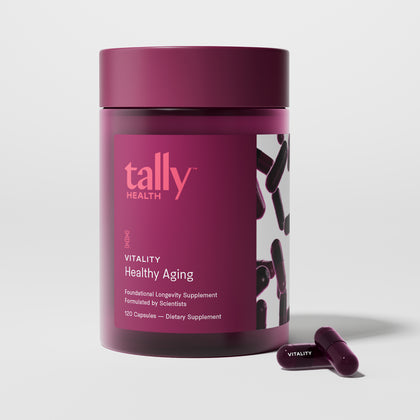
Meet Vitality
Slow aging at a cellular level. This supplement is designed to target all 12 hallmarks of biological aging.
What Vitality is made of:
Calcium Alpha-Ketoglutarate
1,000mg
Quercetin
500mg
Trans-resveratrol
500mg
Fisetin
50mg
Spermidine
900mcg
What Vitality does:
Induces autophagy
Maintains your epigenome
Removes senescent “zombie” cells
Activates sirtuins and repair processes
Suggested Use:
Take four capsules daily, with food (preferably including a healthy fat), to help promote your body's defense against aging.
Membership Benefits
Every six months, we’ll send you a TallyAge™ Test to measure your progress and improve your personalized action plan. Along the way, we’ll send our daily Vitality supplement and help you make powerful changes to unlock deeper health and vitality, for an even better you.
Bi-Annual Testing
Simply swab your cheek and drop the test kit in your mailbox. Our lab team will take care of the rest. Our TallyAge™ metric, developed from the world’s most comprehensive DNA methylation dataset of adult cheek cells, is an indicator of how you're aging on a biological level.
Personalized Recommendations
The results are in. You’ll get accurate insights into your biological health and aging - plus, a personalized action plan that highlights the high impact changes you can make to your lifestyle and daily habits to slow aging. Each recommendation is backed by efficacy data from groundbreaking research. All available, at the touch of a button, through Tally Health’s intuitive digital platform.