Every cell in your body has a built-in expiration date. At a certain point — whether from stress, damage, or simply too many divisions — a cell stops doing its job. But rather than quietly exiting the scene, many of these worn-out cells stick around, releasing a steady stream of inflammatory signals that affect the cells around them.
Scientists call these zombie cells. The formal term is senescent cells, and the more researchers study them, the clearer it becomes that they play a significant role in how we age — and how well.
Understanding cellular senescence isn't just an exercise in biology. It's a window into why some people seem to age faster than others, why chronic inflammation is so tightly linked to age-related conditions, and what you can actually do to support your body's ability to manage this process.
What Is Cellular Senescence?

Image from Tally Health
Cellular senescence is a state in which a cell permanently stops dividing but doesn't die. It was first described by biologist Dr. Leonard Hayflick in the 1960s, when he observed that human cells could only divide a limited number of times before stopping — a limit now known as the Hayflick limit.
When a cell reaches this threshold, or when it sustains significant DNA damage, it enters senescence as a protective mechanism. The logic is sensible: a damaged cell that keeps dividing could become cancerous. Senescence acts as a brake.
The problem is what happens next.
Senescent cells don't just sit quietly. They become metabolically active in a disruptive way, secreting a cocktail of pro-inflammatory molecules, proteases, and growth factors. Researchers call this the senescence-associated secretory phenotype, or SASP. Over time, this chronic low-grade inflammation — also known as "inflammaging" — may contribute to a wide range of age-related changes in the body, from reduced tissue repair to shifts in immune function.
Why Senescent Cells Accumulate as We Age

Image from Tally Health
In youth, the immune system is relatively efficient at clearing senescent cells. But as we age, that clearance process slows down. The result is a gradual accumulation of senescent cells in tissues throughout the body — the skin, lungs, liver, fat tissue, and even the brain.
Several factors appear to accelerate this accumulation:
Chronic psychological stress, which elevates cortisol and can drive oxidative damage
Poor sleep, which disrupts cellular repair processes that normally happen overnight
Ultraviolet radiation and environmental toxins, which cause direct DNA damage
Metabolic stress from excess blood sugar and chronic inflammation
A sedentary lifestyle, which reduces the body's natural antioxidant defenses
Genetics plays a role too, but research suggests that lifestyle factors may have a meaningful influence on the pace of cellular aging — which is encouraging news for anyone looking to take a more active role in their health.
What the Science Says About Cellular Senescence and Aging

Image from Tally Health
The field of senescence research has accelerated significantly over the past decade. Animal studies have shown that clearing senescent cells can extend healthspan — the period of life spent in good health — and reduce markers of age-related dysfunction in multiple organ systems. Human research is still catching up, but the early signals are intriguing.
One area of focus is the relationship between cellular senescence and what's known as biological age. Unlike chronological age (the number of years you've been alive), biological age reflects the functional state of your cells and tissues. People with a higher biological age relative to their chronological age tend to show higher levels of SASP-related inflammation.
This distinction matters because biological age is modifiable. Studies using epigenetic clocks — tools that estimate biological age from patterns of DNA methylation — have found that certain lifestyle and clinical interventions are associated with measurable reductions in biological age over time].
The Role of NAD+ in Cellular Health

Image from Tally Health
One molecule that keeps appearing in senescence research is NAD+, or nicotinamide adenine dinucleotide. NAD+ is a coenzyme found in every cell, and it plays a central role in energy metabolism, DNA repair, and the activation of sirtuins — a family of proteins linked to longevity pathways.
The challenge: NAD+ levels have been reported to decline significantly within tissues with age. By midlife, most people have roughly half the NAD+ they had in their twenties. This decline is associated with reduced cellular repair capacity, which may contribute to the accumulation of senescent cells over time.
Precursors to NAD+ — such as NMN (nicotinamide mononucleotide) and NR (nicotinamide riboside) — have been studied for their potential to support NAD+ levels in the body. Early human trials suggest these compounds may help restore NAD+ in tissues, though research is ongoing and results vary by individual.
This is one reason NAD+ precursors have become a focus for longevity-minded supplementation. NAD+ by Tally Health includes the precursor niacinamide and was formulated to support NAD+ levels as part of a broader approach to cellular health. The goal isn't to override aging biology — it's to give your cells the raw materials they need to function well for longer.
Lifestyle Strategies That May Support Healthy Aging at the Cellular Level

Image from Tally Health
While there's no single solution to cellular senescence, a growing body of research points to several habits that may help the body manage it more effectively.
Prioritize quality sleep.
Deep sleep is when the body does much of its cellular repair work. Research suggests that chronic sleep deprivation is associated with increased markers of cellular stress and inflammation. Aiming for 7–9 hours of quality sleep per night is one of the most evidence-adjacent things you can do for your cellular health.
Move consistently.
Regular physical activity, particularly a combination of aerobic exercise and resistance training, has been associated with lower levels of senescence markers in muscle and fat tissue. Exercise also supports mitochondrial health, which is closely linked to cellular aging.
Eat a largely whole-food diet.
Diets high in processed foods and refined sugars appear to drive oxidative stress and SASP-related inflammation. On the other hand, polyphenol-rich foods — berries, leafy greens, olive oil — have been associated with lower inflammatory markers in several observational studies.
Manage chronic stress.
Psychological stress can accelerate telomere shortening and increase oxidative damage, both of which contribute to cellular senescence. Practices like mindfulness, breathwork, and even consistent social connection may help buffer these effects.
Consider targeted nutritional support.
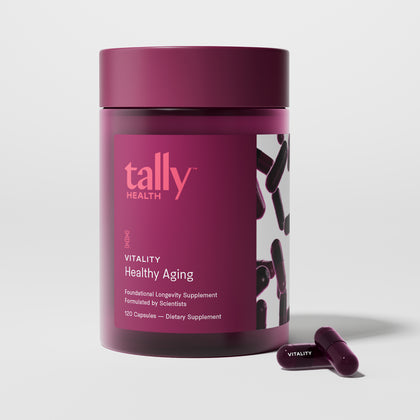
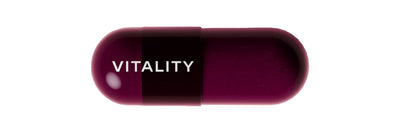
Beyond diet, certain compounds have been studied for their potential role in supporting cellular longevity pathways. This is where a product like Vitality by Tally Health comes in — designed to complement these foundational habits with ingredients like spermidine that support cellular cleanup, along with other compounds selected for their relevance to aging biology.
How to Think About Cellular Senescence in Your Own Health

Image from Tally Health
Cellular senescence is a normal part of biology — it served an important protective purpose long before researchers gave it a name. The goal isn't to eliminate it entirely, but to support the body's natural ability to manage it effectively over time.
That means paying attention to the basics: sleep, movement, diet, stress. It also means staying curious about the emerging science — because the longevity field is moving fast, and the picture of what's possible continues to come into focus.
Products like NAD+ and Vitality by Tally Health are built for people who want to go a step further — who are already doing the foundational work and want evidence-informed supplementation to support it. As research on NAD+ precursors and senescence continues to develop, the scientific rationale for this approach is only getting stronger.
Aging isn't something that happens to you overnight. It's the accumulation of thousands of small cellular decisions, made day after day, year after year. The more you understand about those decisions — and the more intentionally you support them — the more agency you have over how your healthspan unfolds.
What causes cellular senescence?
Cellular senescence is triggered when a cell sustains enough damage or stress that continuing to divide would be unsafe. Common triggers include DNA damage from UV radiation or toxins, telomere shortening after repeated cell divisions, oxidative stress from chronic inflammation, and metabolic stress. The immune system normally clears senescent cells, but this clearance becomes less efficient as we age — which is why they tend to accumulate over time.
Can you reduce the number of senescent cells in your body?
Research is still developing, but evidence from animal studies and early human trials suggests that certain interventions can indeed reduce senescent cell burden
How does cellular senescence relate to biological age?
Biological age is a measure of how well your cells and tissues are functioning, independent of how many years you've been alive. A higher senescent cell burden is indicative of faster aging on a cellular level.
References
Kuehnemann and Wiley. Senescent cells at the crossroads of aging, disease, and tissue homeostasis. Aging Cell 2024.
Zheng et al. Targeting Cellular Senescence in Aging and Age-Related Diseases: Challenges, Considerations, and the Emerging Role of Senolytic and Senomorphic Therapies. Aging Dis 2024.
Suryadevara et al. Charting human cellular senescence in aging and disease. Cell 2026.
Deursen. The role of senescent cells in ageing. Nature 2014.
Huang et al. Cellular senescence: the good, the bad and the unknown. Nat Rev Nephrol 2022.
Song et al. Senescent Cells: Emerging Targets for Human Aging and Age-Related Diseases. Trends Biochem Sci 2020.