Every cell in your body runs on a molecule most people have never heard of. Nicotinamide adenine dinucleotide — NAD+ for short — powers everything from how your mitochondria generate energy to how your DNA gets repaired overnight. The problem: NAD+ and aging are closely linked and, while it’s unclear if blood NAD+ levels decline with age, current evidence suggests that NAD+ levels within tissues (where it matters most) drop over time.
NAD+: The Cell's Energy Currency

Image from Tally Health
NAD+ is a coenzyme found in every cell in your body, and it acts like a rechargeable battery that shuttles electrons between molecules. Without it, your mitochondria — the structures that convert food into usable energy — simply can't do their job.
Think of NAD+ as the currency your cells spend on almost every transaction that keeps you alive: producing ATP (cellular energy), repairing damaged DNA, and regulating a class of proteins called sirtuins. Sirtuins are essentially cellular stress responders, and NAD+ is the fuel they run on. When sirtuins and other enzymes have enough NAD+ to work with, they help regulate inflammation, support metabolic efficiency, and influence how your cells respond to stress — functions that are central to healthy aging.
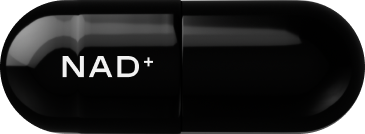
This is where Tally Health's NAD+ supplement comes in: it's formulated to help elevate NAD+ levels so these downstream processes — energy production, oxidative stress protection, sirtuin activity — have the fuel they need to keep running.*
Where Your Body Gets NAD+

Image from Tally Health
Your body makes NAD+ through a few different biochemical pathways, drawing on dietary precursors like tryptophan and forms of vitamin B3 (niacin). It's a closed-loop system: your cells constantly synthesize NAD+, use it, break it down, and resynthesize it — thousands of times a day in a single cell.
The trouble is that this production-and-consumption cycle doesn't stay balanced over time. As you get older, the "consumption" side of the ledger starts winning.
Why NAD+ Levels Decline With Age in Tissues
Research consistently shows that NAD+ levels in tissues fall as we age. This isn't a single-cause story; it's the result of several converging shifts in cellular biology.
First, the enzymes responsible for making NAD+ become less efficient over time. Second, and perhaps more significantly, the enzymes that consume NAD+become more active. Your cells are burning through their NAD+ supply faster than they can replace it.
The CD38 Connection
One of the primary NAD+-consuming enzymes is CD38, and its activity rises with age — largely in response to chronic, low-grade inflammation, a phenomenon researchers call "inflammaging." CD38 has been identified as a central driver of age-related NAD+ decline, showing that inhibiting the enzyme in mice restored NAD+ levels and improved metabolic function.
In other words, aging and inflammation feed each other: inflammation drives up CD38 activity, CD38 depletes NAD+, and lower NAD+ leaves sirtuins with less fuel to help regulate that same inflammation. It's a feedback loop, not a single switch.
What Happens When NAD+ Runs Low

Image from Tally Health
Because NAD+ touches so many cellular processes, its decline doesn't show up as one symptom — it shows up as a general loss of resilience. Lower NAD+ availability has been associated with:
Reduced mitochondrial efficiency, which can contribute to the fatigue many people notice creeping in with age
Slower DNA repair, since NAD+ fuels the PARP enzymes responsible for fixing damaged DNA strands
Diminished sirtuin activity, which may affect how well your cells manage metabolic and oxidative stress
Impaired mitochondrial biogenesis, meaning your cells become slower to build fresh, functional mitochondria
None of this means your body is falling apart — it means the systems that keep your cells resilient are running on a thinner margin. That's an important distinction: aging cells aren't broken cells, they're cells operating with fewer resources to draw on.
How to Support Healthy NAD+ Levels

Image from Tally Health
Because NAD+ decline is driven by both slower production and faster consumption, supporting healthy levels means addressing both sides of that equation. A few evidence-informed approaches:
Exercise regularly. Both aerobic and resistance training have been shown to increase NAD+ levels, likely by boosting mitochondrial density and activating the enzyme NAMPT, which is rate-limiting for NAD+ synthesis.
Prioritize sleep. NAD+ metabolism follows a circadian rhythm, and disrupted sleep has been linked to lower NAD+ availability in animal studies.
Manage chronic inflammation. Since CD38 activity rises with inflammaging, addressing sources of chronic inflammation — diet, stress, sleep — indirectly protects your NAD+ pool.
Consider NAD+ precursor supplementation. Because dietary intake alone often can't keep pace with age-related tissue decline, many people turn to compounds like niacinamide (a form of vitamin B3) that supply the raw materials your body uses to resynthesize NAD+.
This is precisely the gap Tally Health's NAD+ supplement is designed to help close, using niacinamide to help replenish what your body is losing faster than it can rebuild.
Replenish NAD+ Levels With Tally Health's NAD+ Supplement

Image from Tally Health
Understanding why NAD+ declines in tissues is only half the picture — the more useful question is what you can actually do about it. Since production slows and consumption speeds up simultaneously as you age, supporting your NAD+ pool typically requires giving your cells more raw material to work with, not just protecting what you have.
Tally Health's NAD+ Supplement is formulated with 1,000 mg of niacinamide (vitamin B3) to help elevate NAD+ levels and fuel the cellular functions that depend on them — energy production, oxidative stress protection, mitochondrial function, and sirtuin activity.* It's gluten-free, vegan, non-GMO, and free from the nine major allergens.
See what your biological age says about your cellular energy — explore the NAD+ Supplement.
References
Janssens et al. Delayed molecular aging, preservation of energy metabolism and enhanced exercise response in exercise-trained human muscle. Nat Aging 2026.
Janssens et al. Healthy aging and muscle function are positively associated with NAD+ abundance in humans. Nat Aging 2022.
Lautrup et al.NAD+ in Brain Aging and Neurodegenerative Disorders. Cell Metab 2019.
Kramer and Johnson. Apigenin: a natural molecule at the intersection of sleep and aging. Front Nutr 2024.
Sun et al. NAD+ glycohydrolases-CD38 as a therapeutic target in aging: physiological roles, molecular mechanisms, and future opportunities in anti-aging research. Biochem Pharmacol 2025.
Recommended Supplements
What is NAD+ and why is it important?
NAD+ (nicotinamide adenine dinucleotide) is a coenzyme found in every cell that's essential for converting food into cellular energy, repairing DNA, and fueling sirtuin proteins that regulate metabolic and inflammatory responses. Without adequate NAD+, these processes become less efficient, which is why it's considered a key marker in cellular aging research.
At what age do NAD+ levels start to decline in tissues?
Research suggests NAD+ levels begin declining gradually in early adulthood and drop more noticeably from midlife onward. The exact trajectory varies by tissue type and individual health factors.
How can I increase my NAD+ levels naturally?
Regular exercise, consistent sleep, and managing chronic inflammation are all associated with healthier NAD+ levels, since they support both NAD+ production and reduce the enzymes that consume it. Many people also use NAD+ precursor supplements, like niacinamide, to supply additional raw material for NAD+ synthesis.
Is NAD+ the same as NMN or NR?
NAD+, NMN (nicotinamide mononucleotide), and NR (nicotinamide riboside) are related but distinct — NMN and NR are precursor molecules your body converts into NAD+, while NAD+ is the active coenzyme itself. Supplementing with any of these compounds is aimed at the same goal: giving your cells more material to resynthesize NAD+.