As cold and flu season kicks into high gear, bolstering your immune system becomes essential. While vitamin C and zinc often steal the spotlight, we shouldn’t ignore other lesser-known but just as impressive immune-enhancing molecules, such as beta-glucan. Found in oats, barley, yeast, and mushrooms, beta-glucan’s structure changes depending on its source. Whole grains, such as barley and oats, are particularly rich in beta-glucan and are an important part of a healthy diet. Beta-glucan is a type of soluble fiber found in whole grains, especially in oat bran, which is known for its cholesterol-lowering and heart health benefits. Interestingly, yeast and mushrooms boast more intricate branching, giving them stronger immune-activating abilities than their grain-based counterparts [1,2]. That’s why we formulated our immune support supplement, Defend, with yeast-derived beta-glucan, to give your immune system the advantage it needs to weather any season.
The immune system health benefits of beta-glucan

Image from Tally Health
Here’s what the science reveals about the healthy immune system of beta-glucan:
Beta-glucan supports immune function by enhancing the activity of key immune cells and modulating the immune response. Research shows that beta-glucan activates innate immune cells such as macrophages and dendritic cells, which recognize pathogens through receptors like TLRs and Dectin-1. Additionally, beta-glucan fragments are recognized by complement receptors on immune cells, such as CR3, helping to trigger a robust immune response against infections and tumor cells. This activation leads to the production of pro inflammatory cytokines, including IL-6, IL-8, and TNF-α, which play a crucial role in the body's defense against pathogens.
May prevent respiratory infections
As an immunomodulator, beta-glucan can enhance the body's defenses against infections [3]. Research indicates that yeast beta-glucan plays a crucial role in trained immunity, offering enhanced and long-term protection against secondary infections [4].
Reduces infection duration and severity
While preventing infections is ideal, supporting your immune system to mitigate symptoms and shorten infection length is the next best approach. A systematic review and meta-analysis of human clinical trials, including multiple randomized controlled trials, concluded that yeast beta-glucan can decrease the incidence and duration of upper respiratory tract infections [5]. These findings are supported by several other randomized controlled trials, including research on marathon runners [6, 7, 8]. Another randomized controlled trial discovered that individuals taking yeast beta-glucan experienced a 25% reduction in common cold symptoms compared to those in the placebo group [9].
As an immunomodulator, beta-glucan can enhance the body's defenses against infections [3]. Research indicates that yeast beta-glucan plays a crucial role in trained immunity, offering enhanced and long-term protection against secondary infections [4].
Activates key immune cells
Yeast beta-glucan enhances immunity by stimulating vital immune cells such as macrophages and neutrophils, which boost antibody production and support a healthy inflammatory response [10]. Beta-glucan also influences cellular responses such as cytokine production and phagocytosis, further enhancing the immune system's ability to respond to pathogens. It can modulate the activity of T cells, which are essential for adaptive immunity. Bone marrow is a key site for the development of immune cells that respond to beta-glucan stimulation. Research has shown that beta-glucan significantly reduces inflammatory markers in patients with allergic rhinitis [11]. Another study found that this molecule increased circulating B cells, which produce infection-fighting antibodies, in healthy individuals [12].
In addition to combating respiratory infections, research indicates that beta-glucan can enhance the outcomes of E. coli infections by minimizing tissue damage caused by an excessive inflammatory response to support a healthy immune system [13].
Beta-glucan and biochemical threats

Image from Tally Health
Beta-glucan has been explored as a potential treatment against bioterrorism threats. Research indicates that beta-glucan increases resistance to anthrax and other biochemical threats when administered both before and after infection [14, 15]. This study also highlighted beta-glucan’s ability to enhance the effectiveness of antibiotics, vaccines, and other preventative measures. Additionally, beta-glucan has been studied for its potential to enhance the efficacy of monoclonal antibodies in cancer treatment by boosting immune-mediated tumor cell clearance.
Beta-glucan and Longevity: Your immune ally for living healthier, longer

Image from Tally Health
In the realm of healthy aging, research using animal models has shown promising results for beta-glucan. Studies have found that it extends lifespan and delays age-related markers in fish, enhances adaptive immunity in older mice, and improves recognition memory in mice [16, 17, 18]. Available human studies indicate that beta-glucan fights oxidative stress, a major factor in aging, and helps reduce inflammaging, a hallmark of aging [19, 20]. By bolstering our bodies against these age-related changes, beta-glucan may help promote a longer, healthier life.
Beta-glucan, as a dietary fiber found in barley foods and whole grains, supports glycemic control, improves glucose tolerance, and reduces insulin resistance, which are important for healthy aging and diabetes mellitus prevention. Regular barley intake and increased food consumption of dietary fibers, including cereal fiber, are associated with better weight management, lower body weight, and healthier body mass index, reducing the increased risk of metabolic diseases. Beta-glucan fermentation by gut microbiota in the gastrointestinal tract produces short chain fatty acids and other fatty acids, which support gut health, modulate immune responses, and help prevent inflammatory bowel disease. Beta-glucan intake has been shown to lower blood glucose, cholesterol levels (including total cholesterol, serum cholesterol, blood cholesterol, low density lipoprotein, ldl cholesterol), and improve high density lipoprotein, thereby supporting cardiovascular health and reducing the risk of cardiovascular disease and cardiovascular diseases. Beta-glucan can also help regulate blood pressure and high blood pressure, further supporting heart health. These health benefits are supported by health claims and previous study findings, and the daily intake of beta glucan is recommended for optimal metabolic and cardiovascular outcomes. The gut microbiome plays a key role in mediating these effects, and beta-glucan supports a diverse and healthy gut microbiome. Beta-glucan also plays a role in lipid metabolism and may reduce the risk of impaired glucose tolerance and diabetes mellitus. Additionally, beta-glucan may support wound healing and has been shown to have beneficial effects on skin and tissue repair.
Boost your beta-glucan intake with Defend

Image from Tally Health
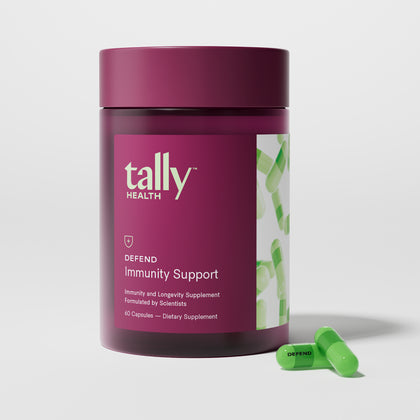
Meet Tally Health’s Defend — your ultimate travel companion for cellular protection.
Formulated with the immune and longevity-supportive ingredients quercetin, vitamin C, beta glucan, zinc and vitamin D3 , Defend helps combat inflammaging and oxidative stress—two major biological stressors that spike during travel.
Whether you're flying across the world or commuting to your next meeting, Defend helps your body stay balanced, resilient, and ready for anything.
What is beta-glucan?
Beta-glucan is a type of soluble fiber found in whole grains like oats and barley, as well as in yeast and mushrooms. Its structure varies depending on the source, which influences its immune-modulating properties.
How does beta-glucan support the immune system?
Beta-glucan enhances immunity by activating key immune cells like macrophages, neutrophils, and dendritic cells. It helps stimulate cytokine production, boosts antibody responses, and improves the body’s defense against pathogens, including respiratory infections.
How can beta-glucan support healthy aging and longevity?
Beta-glucan may extend lifespan and delay age-related decline by reducing oxidative stress and inflammaging. It also supports metabolic health, cardiovascular function, and gut microbiome diversity—key factors in promoting a longer, healthier life.
Recommended Supplements
Citations
[1] De Marco Castro E, Calder PC, Roche HM. β-1,3/1,6-Glucans and Immunity: State of the Art and Future Directions. Mol Nutr Food Res. 2021 Jan;65(1):e1901071. doi: 10.1002/mnfr.201901071. Epub 2020 Apr 27. PMID: 32223047; PMCID: PMC7816268.
[2] Murphy EJ, Rezoagli E, Major I, Rowan NJ, Laffey JG. β-Glucan Metabolic and Immunomodulatory Properties and Potential for Clinical Application. J Fungi (Basel). 2020 Dec 10;6(4):356. doi: 10.3390/jof6040356. PMID: 33322069; PMCID: PMC7770584.
[3] Jawhara, S. How to boost the immune defence prior to respiratory virus infections with the special focus on coronavirus infections. Gut Pathog 12, 47 (2020). https://doi.org/10.1186/s13099-020-00385-2
[4] Horneck Johnston, C. J., Ledwith, A. E., Lundahl, M. L., Charles-Messance, H., Hackett, E. E., O’Shaughnessy, S. D., Clegg, J., Prendeville, H., McGrath, J. P., Walsh, A. M., Case, S., Austen Byrne, H., Gautam, P., Dempsey, E., Corr, S. C., & Sheedy, F. J. (2024). Recognition of yeast β-glucan particles triggers immunometabolic signaling required for trained immunity. IScience, 27(3), 109030. https://doi.org/10.1016/j.isci.2024.109030
[5] Zhong, K., Liu, Z., Lu, Y. et al. Effects of yeast β-glucans for the prevention and treatment of upper respiratory tract infection in healthy subjects: a systematic review and meta-analysis. Eur J Nutr 60, 4175–4187 (2021). https://doi.org/10.1007/s00394-021-02566-4
[6] Dharsono, T., Rudnicka, K., Wilhelm, M., & Schoen, C. (2018). Effects of Yeast (1,3)-(1,6)-Beta-Glucan on Severity of Upper Respiratory Tract Infections: A Double-Blind, Randomized, Placebo-Controlled Study in Healthy Subjects. Journal of the American College of Nutrition, 38(1), 40–50. https://doi.org/10.1080/07315724.2018.1478339
[7] Mah E, Kaden VN, Kelley KM, Liska DJ. Soluble and Insoluble Yeast β-Glucan Differentially Affect Upper Respiratory Tract Infection in Marathon Runners: A Double-Blind, Randomized Placebo-Controlled Trial. J Med Food. 2020 Apr;23(4):416-419. doi: 10.1089/jmf.2019.0076. Epub 2019 Oct 1. PMID: 31573387.
[8] Talbott, S. M., & Talbott, J. A. (2012). Baker’s Yeast Beta-Glucan Supplement Reduces Upper Respiratory Symptoms and Improves Mood State in Stressed Women. Journal of the American College of Nutrition, 31(4), 295–300. https://doi.org/10.1080/07315724.2012.10720441
[9] Auinger A, Riede L, Bothe G, Busch R, Gruenwald J. Yeast (1,3)-(1,6)-beta-glucan helps to maintain the body's defence against pathogens: a double-blind, randomized, placebo-controlled, multicentric study in healthy subjects. Eur J Nutr. 2013 Dec;52(8):1913-8. doi: 10.1007/s00394-013-0492-z. Epub 2013 Jan 23. PMID: 23340963; PMCID: PMC3832763.
[10] Zhong X, Wang G, Li F, Fang S, Zhou S, Ishiwata A, Tonevitsky AG, Shkurnikov M, Cai H, Ding F. Immunomodulatory Effect and Biological Significance of β-Glucans. Pharmaceutics. 2023 May 29;15(6):1615. doi: 10.3390/pharmaceutics15061615. PMID: 37376063; PMCID: PMC10302218.
[11] Kirmaz C, Bayrak P, Yilmaz O, Yuksel H. Effects of glucan treatment on the Th1/Th2 balance in patients with allergic rhinitis: a double-blind placebo-controlled study. Eur Cytokine Netw. 2005 Jun;16(2):128-34. PMID: 15941684.
[12] Gaullier, J.M., Sleboda, J., Øfjord, E.S., Ulvestad, E., Nurminiemi, M., Moe, C., Tor, A., & Gudmundsen, O. (2011). Supplementation with a soluble β-glucan exported from Shiitake medicinal mushroom, Lentinus edodes (Berk.) singer mycelium: a crossover, placebo-controlled study in healthy elderly. International journal of medicinal mushrooms, 13 4, 319-26 .
[13] Walachowski, S., Breyne, K., Secher, T., Cougoule, C., Meyer, E., Foucras, G., & Tabouret, G. (2022). Oral supplementation with yeast β-glucans improves the resolution of Escherichia coli-associated inflammatory responses independently of monocyte/macrophage immune training. Frontiers in Immunology, 13, 1086413. https://doi.org/10.3389/fimmu.2022.1086413
[14] Kournikakis B, Mandeville R, Brousseau P, Ostroff G. Anthrax-protective effects of yeast beta 1,3 glucans. MedGenMed. 2003 Mar 21;5(1):1. PMID: 12827062.
[15] Ostroff, G. R. (2010). Use of beta-glucans against biological warfare weapons and pathogens including anthrax (U.S. Patent No. 7,786,094). U.S. Patent and Trademark Office. https://patents.google.com/patent/US7786094B2/en
[16] Song L, Zhou Y, Ni S, Wang X, Yuan J, Zhang Y, Zhang S. Dietary Intake of β-Glucans Can Prolong Lifespan and Exert an Antioxidant Action on Aged Fish Nothobranchius guentheri. Rejuvenation Res. 2020 Aug;23(4):293-301. doi: 10.1089/rej.2019.2223. Epub 2019 Nov 22. PMID: 31591931.
[17] Song, L., Yuan, J., Ni, S., Zhou, Y., Wang, X., Chen, Y., & Zhang, S. (2020). Enhancement of adaptive immune responses of aged mice by dietary intake of β-glucans, with special emphasis on anti-aging activity. Molecular Immunology, 117, 160-167. https://doi.org/10.1016/j.molimm.2019.10.019
[18] Hu, M., Zhang, P., Wang, R., Zhou, M., Pang, N., Cui, X., Ge, X., Liu, X., Huang, X., & Yu, Y. (2022). Three Different Types of β-Glucans Enhance Cognition: The Role of the Gut-Brain Axis. Frontiers in Nutrition, 9, 848930. https://doi.org/10.3389/fnut.2022.848930
[19] Yu C, Chen H, Du D, Lv W, Li S, Li D, Xu Z, Gao M, Hu H, Liu D. β-Glucan from Saccharomyces cerevisiae alleviates oxidative stress in LPS-stimulated RAW264.7 cells via Dectin-1/Nrf2/HO-1 signaling pathway. Cell Stress Chaperones. 2021 Jul;26(4):629-637. doi: 10.1007/s12192-021-01205-5. Epub 2021 Apr 21. PMID: 33880723; PMCID: PMC8275741.
[20] Bacha U, Nasir M, Iqbal S, Anjum AA. Nutraceutical, Anti-Inflammatory, and Immune Modulatory Effects of β-Glucan Isolated from Yeast. Biomed Res Int. 2017;2017:8972678. doi: 10.1155/2017/8972678. Epub 2017 Aug 23. PMID: 28913359; PMCID: PMC5587958.