If you’ve ever landed after a long flight feeling wired at midnight, exhausted at noon, or hungry at all the wrong times, you’ve experienced jet lag—a temporary but real disruption of your body’s circadian rhythm. During the holidays, when more people cross multiple time zones, jet lag becomes one of the most common sleep complaints in sleep medicine clinics.
But why does jet lag happen, exactly? And how can you use science-backed strategies to reset your internal clock more efficiently?
Let’s break down what happens to your circadian system during travel—and how to get your sleep wake cycle back on track.
What Causes Jet Lag? Understanding Your Internal Circadian Clock

Image from Tally Health
Your circadian rhythm is your body’s 24-hour timing system—your biological set of instructions that determines when you feel alert, when you get tired, how your metabolism functions, and how your hormones cycle throughout the day.
This internal timing system is regulated by the suprachiasmatic nucleus (SCN)—a cluster of neurons in the brain often called the body’s master clock. It syncs to the environment through cues like light exposure, food intake, temperature, and physical activity.
When you cross time zones, your internal circadian clock is still aligned with your old light–dark cycle, while the external environment around you is suddenly hours ahead or behind. This creates a temporary state of circadian disruption—better known as the symptoms of jet lag.
Common jet lag symptoms include:
Difficulty sleeping or falling asleep at the wrong time
Excessive daytime sleepiness
Mood changes or irritability
Grogginess, poor concentration, or slower reaction times
Digestive discomfort
Reduced physical performance (noted frequently in sports medicine research)
Interestingly, jet lag is worse when traveling east. That’s because it’s typically harder to fall asleep earlier than your natural rhythm, and the body adapts more slowly to advancing the clock versus delaying it.
How Long Does Jet Lag Last?

Image from Tally Health
Most people adjust at a rate of about a day per time zone crossed, though it can take a few days—and sometimes a few weeks—to fully resynchronize, especially after long-haul air travel.
Factors that make jet lag worse include:
Evening arrival times
Excessive nighttime light exposure
Sleep deprivation before travel
Underlying sleep disorders or circadian rhythm sleep disorders
Chronic circadian rhythm disruption from shift work
The Science of Resetting Your Circadian Rhythm

Image from Tally Health
Fortunately, researchers in sleep medicine, chronobiology, and human circadian rhythms have identified evidence-based tools for treating jet lag and helping the body adapt faster.
Let’s explore some science-backed strategies:
1. Use Strategic Light Exposure (Your Most Powerful Tool)
Light is the strongest regulator of the circadian phase—it can induce phase shifts that move your rhythm earlier or later.
Morning light exposure helps you shift your clock earlier
→ Helpful when traveling east or trying to avoid jet lag by adapting to an earlier bedtime.Evening light delays your rhythm
→ Useful when traveling west or trying to stay awake later in a new time zone.
To reduce jet lag, follow this general rule:
Seek bright light when you want to be awake; avoid it when you want your body to wind down.
This single habit significantly improves sleep quality, helps you fall asleep at the right time, and aligns your body’s natural rhythms with your local time.
2. Shift Your Sleep Schedule Before You Travel
Sleep researchers suggest adjusting your bedtime a few days before flying:
For eastbound flights: Go to bed earlier each night.
For westbound flights: Go to bed later and wake up later.
Small changes to your sleep wake schedule (even by 30–60 minutes) make transitioning easier once you arrive.
3. Protect Your Sleep Quality With Science-Backed Support
When you're struggling with sleep disruption, circadian misalignment, and poor sleep, targeted nutrients that support deep, restorative rest can be helpful.
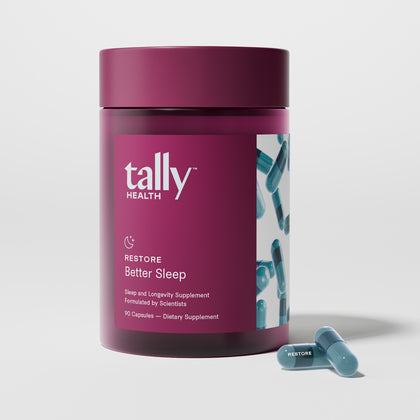
Restore by Tally Health is designed to support healthy aging through high-quality sleep, using science-backed ingredients that help you fall asleep faster, sleep more deeply, and wake feeling rejuvenated—making it an ideal companion for holiday travel and circadian recovery.
Taking Restore during the transition to a new sleep wake pattern may help stabilize your rhythm and promote quality sleep while your internal clock adjusts.
4. Anchor Your Circadian Rhythm With Morning Routine Cues
Beyond light, your body relies on consistent daily signals:
Eat breakfast soon after waking
Get bright light exposure
Move your body (even light stretching helps)
Hydrate well after air travel
These cues strengthen your body’s circadian rhythms, reduce grogginess, and improve alertness.
5. Limit Evening Disruptors
To avoid accidentally delaying your sleep wake cycle:
Reduce exposure to bright light at night (especially screens)
Avoid heavy meals close to bedtime
Delay caffeine after crossing time zones
Keep the bedroom cool and dark
These habits help your circadian clock sync more effectively with your new time zone.
How to Prevent Jet Lag Next Time

Image from Tally Health
While jet lag recovery is often manageable within a few days, prevention is even better. Research in sleep medicine reviews and sports medicine highlights that you can prevent jet lag or reduce its severity by:
Gradually shifting your schedule pre-travel
Using morning or evening light to guide the clock
Maintaining good sleep hygiene
Supporting sleep with science-backed tools like Restore by Tally Health during transitions
Aligning meals and activity with the new local time as soon as possible
These strategies help your body adapt more efficiently and reduce the risk of sleep problems, sleep disturbance, or extended circadian rhythm disruption.
The Bottom Line

Image from Tally Health
Holiday travel doesn’t have to leave you battling jet lag disorder, sleep disruption, or excessive daytime sleepiness. By understanding your body’s internal circadian clock and using targeted, evidence-based tools like strategic light exposure, schedule shifting, and high-quality sleep support, you can help your system adjust faster—no matter how many time zones you cross.
With intention—and a little science—you can land feeling aligned, rested, and ready to enjoy the season.
References
Choy and Ralbu. Jet lag: current and potential therapies. P T 2011; https://pmc.ncbi.nlm.nih.gov/articles/PMC3086113/
Ambesh et al. Jet lag: Heuristics and therapeutics. J Family Med Prim Care 2018; https://doi.org/10.4103/jfmpc.jfmpc_220_17
Zhang et al. The effect of jet lag on the human brain: A neuroimaging study. Hum Brain Mapp 2020; https://doi.org/10.1002/hbm.24945
Sack. The pathophysiology of jet lag. Travel Med Infect Dis 2009; https://doi.org/10.1016/j.tmaid.2009.01.006
Eastman and Burgess. How To Travel the World Without Jet lag. Sleep Med Clin 2009; https://doi.org/10.1016/j.jsmc.2009.02.006
What causes jet lag?
Jet lag occurs when your internal circadian clock is still aligned with your original light–dark cycle while the external environment in a new time zone is hours ahead or behind, creating temporary circadian disruption.
How long does jet lag usually last?
Most people adjust at a rate of about one day per time zone crossed, though full resynchronization can take several days or even a few weeks after long-haul travel.
What is the best way to reset your circadian rhythm after travel?
Strategic light exposure is the most powerful tool: seek bright light when you want to be awake and avoid it when you want your body to wind down to help align your internal clock with local time.