A bad night's sleep feels like a short-term problem — foggy thinking, a slower morning, maybe a second or third coffee. But the research on sleep and longevity tells a different story: chronic poor sleep leaves a measurable signature on your DNA, and that signature is associated with faster biological aging, not just next-day fatigue.
Why Sleep Is a Longevity Pathway, Not Just Recovery

Image from Tally Health
Sleep isn't downtime for the body — it's when several of the processes that determine how well you age are actively running. Immune signaling resets, metabolic waste gets flushed from the brain, and hormone rhythms that govern stress and repair recalibrate. When sleep is consistently short or fragmented, those processes don't just pause; they get disrupted in ways that compound over time.
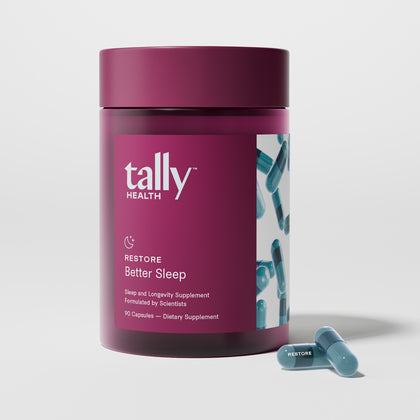
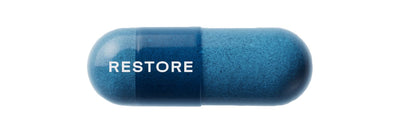
This is where a product like Restore fits into the picture — it's designed to support the parts of the sleep cycle most tied to aging: falling asleep faster, sleeping more deeply, and supporting the natural melatonin production that helps synchronize those overnight repair processes.
What Happens Biologically While You Sleep
During deep sleep, your body shifts into a repair-dominant state: growth hormone rises, inflammatory cytokines that were active during the day get regulated back down, and cellular repair mechanisms have space to operate without competing against the metabolic demands of being awake. Think of sleep as the maintenance window IT teams use to patch systems overnight — skip it too often, and the small bugs never get fixed, they accumulate.
The Research: How Sleep Affects Your Epigenetic Age

Image from Tally Health
Short Sleep and Insomnia Accelerate Epigenetic Clocks
The clearest evidence connecting sleep to aging comes from epigenetic clock research — the same DNA methylation-based tools used to estimate biological age. Research has found that insomnia causally accelerates GrimAge, a next-generation epigenetic clock trained to predict mortality risk in older adults, with sleep disturbances acting as the primary driver rather than a downstream effect of aging itself.
Population data tells the same story at scale and has shown that shorter sleep duration, poorer sleep quality, and irregular sleep timing showed a dose-response relationship with accelerated biological aging indicators Overall sleep quality is also associated with an older molecular profile.
Even more strikingly, research on older adults with insomnia found a distinct DNA methylation signature — a global pattern of reduced methylation concentrated in genes tied to oxidative stress and protein quality control — alongside shorter methylation-estimated telomere length, compared to healthy sleepers.
The Mechanism: Cortisol, Inflammation, and Mitochondrial Strain
The biological chain reaction starts with stress hormones. Chronic sleep deprivation raises cortisol, which suppresses immune function and disrupts the circadian rhythms that normally keep inflammation in check. Elevated cortisol paired with disrupted circadian signaling drives up inflammatory cytokine activity — a state researchers call "inflammaging," where low-grade, chronic inflammation quietly accelerates tissue and cellular aging.
Sleep loss also hits your mitochondria directly. Research shows it reduces activity in the mitochondrial electron transport chain and suppresses a cellular cleanup process called mitophagy — the mechanism your cells use to clear out damaged mitochondria. Without it, damaged mitochondria accumulate, oxidative stress rises, and that stress feeds back into more inflammation. It's a loop: bad sleep drives inflammation, inflammation disrupts sleep-regulating rhythms further, and the cycle reinforces itself.
How Much Sleep Actually Supports Longevity

Image from Tally Health
Most of the research linking sleep to accelerated epigenetic aging centers on consistently short sleep (under 6–7 hours) and poor sleep quality — not the occasional rough night. Consistency and depth matter as much as raw hours: irregular sleep timing showed its own independent association with epigenetic age acceleration, separate from duration alone.
Practically, that means the goal isn't just "more sleep" but a more stable, higher-quality sleep pattern: a consistent sleep and wake window, minimizing the late-night cortisol spikes that come from stress or stimulants, and giving the body's melatonin rhythm room to run on schedule. That all being said, most adults need between seven and nine hours of sleep.
Support Healthy Sleep and Aging with Tally Health

Image from Tally Health
Given how directly sleep quality shows up in epigenetic clock data, it's one of the more actionable levers you have on your biological aging. Restore is formulated to support that lever directly — combining magnesium (from magnesium bisglycinate chelate complex), L-theanine, and apigenin to help you fall asleep faster, sleep more deeply, and support healthy aging overnight, without relying on synthetic sedatives.
Because sleep-driven epigenetic changes are measurable, they're also trackable. The TallyAge Test analyzes your DNA methylation patterns to estimate your biological age, giving you a concrete way to see whether improving your sleep habits over months is actually moving the number that matters.
See what your biological age says about your sleep habits with the TallyAge Test.
Does poor sleep actually speed up aging?
Research suggests it can. Multiple studies using epigenetic clocks — DNA methylation-based tools that estimate biological age — have found that short sleep duration, poor sleep quality, and insomnia are associated with accelerated epigenetic aging.
How does sleep affect epigenetic age specifically?
Poor sleep raises cortisol and disrupts circadian rhythms that normally regulate inflammation, while also impairing mitochondrial repair processes like mitophagy. Over time, this shows up as measurable DNA methylation changes that epigenetic clocks interpret as accelerated aging.
How many hours of sleep do you need for longevity?
Most studies linking sleep to accelerated epigenetic aging focus on consistently short sleep, generally under 6–7 hours a night, combined with poor quality or irregular timing. Consistency in sleep and wake times appears to matter independently of total sleep duration. Most adults need between 7 and 9 hours of sleep a night.
References
- Kramer and Johnson. Apigenin: a natural molecule at the intersection of sleep and aging. Front Nutr 2024.
Shokhirev et al. CheekAge: a next-generation buccal epigenetic aging clock associated with lifestyle and health. Geroscience 2024.
Cappuccio et al. Sleep duration and all-cause mortality: a systematic review and meta-analysis of prospective studies. Sleep 2010.
Brutto et al. Poor sleep quality increases mortality risk: A population-based longitudinal prospective study in community-dwelling middle-aged and older adults. Sleep Health 2024.
Mander et al. Sleep and Human Aging. Neuron 2017.