Your sunscreen blocks UV. Your SPF lip balm protects your pout. But what if the real summer damage is happening somewhere you can't see — inside your cells?
Every summer, most of us unknowingly run a perfect experiment in accelerated inflammation. We sleep less (it's light until 9pm). We drink more (rosé on the rooftop). We spend hours under UV radiation that penetrates far deeper than a sunburn. And we do all of this while telling ourselves it's healthy — we're outdoors, we're active, we're getting our vitamin D.
Here's what the research actually shows: summertime patterns can quietly spike a biological marker called chronic low-grade inflammation (AKA inflammaging) — one of the most well-documented drivers of accelerated aging. The good news? Once you understand the mechanisms, you have a meaningful toolkit to work with. Let's get into it.
When the Sun Sends In the Fire Brigade

Image from Tally Health
UV radiation is the classic summer stressor, and its relationship with inflammation is more nuanced than "it gives you sunburns."
When UV rays — particularly UVB and UVA — strike the skin, they cause direct DNA damage in skin cells. The body's immediate response is inflammation: blood vessels dilate (that's the redness), immune cells flood the area, and a cascade of pro-inflammatory signaling molecules called cytokines gets released, including TNF-α, IL-1β, and IL-6.
In an acute sunburn, this is the immune system doing its job. The problem is cumulative: repeated UV exposure — even below the threshold of a visible burn — keeps nudging inflammatory markers upward over time. Research has found that chronic UV exposure elevates baseline systemic inflammation, not just local skin inflammation. Your skin absorbs the hit, but the ripple reaches further.
There's also a second mechanism worth knowing: UV radiation generates reactive oxygen species (ROS) — unstable molecules that damage cellular structures including mitochondria, proteins, and DNA. Your body dispatches antioxidant defenses to neutralize ROS, but when the load is high enough, the system gets outpaced. This is called oxidative stress, and it is directly linked to inflammaging — the chronic, low-grade inflammatory state associated with biological aging.
The takeaway: Sun exposure isn't inherently bad (vitamin D synthesis, circadian rhythm regulation, and mood are all downstream benefits). But unmanaged or cumulative UV exposure tips the inflammatory balance in a direction that matters for long-term health.
The Heat Is On (And So Is NF-κB)

Image from Tally Health
Temperature itself is an inflammatory signal — and summer heat goes further than making you sweaty and irritable.
When core body temperature rises significantly, the body activates heat shock proteins (HSPs) as a protective, hormetic response. In the short term, this is actually beneficial — HSPs help refold damaged proteins and have some anti-inflammatory properties. But prolonged or repeated heat stress tells a different story.
Research shows that sustained heat exposure activates NF-κB (Nuclear Factor kappa B), a master transcription factor that essentially functions as inflammation's "on switch”. NF-κB doesn't just respond to heat — it responds to UV radiation, alcohol, sleep deprivation, and processed foods. Notice how those all also happen to be summer staples.
When multiple summer stressors are occurring simultaneously, NF-κB activation compounds. Inflammatory cytokine production increases. And because NF-κB also plays a role in cellular senescence — the process by which cells stop dividing and begin secreting more inflammatory signals — chronic activation contributes to what researchers call the senescence-associated secretory phenotype (SASP). SASP is one of the key mechanisms linking lifestyle inflammation to accelerated biological aging.
The short version: Heat plus UV plus late nights plus a few extra drinks don't just feel rough. They're activating overlapping inflammatory pathways that, over time, accumulate in ways that affect how your body ages.
Sleep Less, Inflame More

Image from Tally Health
Here's the summer data point that surprises most people: sleep disruption may be the single most potent driver of inflammatory burden in the season.
Extended daylight hours delay melatonin release. Warm bedroom temperatures fragment sleep architecture. Social schedules shift later. The result for many people is 60–90 minutes less sleep per night from June through August — and that deficit has measurable biological consequences.
Research has found that even one week of sleeping six hours or less per night (vs. the recommended seven to nine) significantly elevates circulating levels of IL-6 and CRP — two inflammatory markers. A separate analysis using data from the UK Biobank found that chronic short sleep was associated with higher biological age as measured by epigenetic clocks.
Melatonin — the hormone that governs your sleep-wake cycle — also happens to be a potent antioxidant and anti-inflammatory agent. When sleep is shortened and melatonin production is blunted, you lose both the recovery benefits of sleep itself and the direct anti-inflammatory effect of melatonin. It's a double-hit.
Science-backed ways to cool your summer inflammatory load

Image from Tally Health
Prioritize sleep over social obligations, at least 5 nights a week.
Even 90 extra minutes at 10pm vs. midnight makes a measurable difference in inflammatory markers. Blackout curtains are a worthwhile summer investment.
Time your sun exposure intentionally.
Morning UV (before 10am) delivers vitamin D with a lower inflammatory burden than midday exposure. Reserve extended outdoor time for early and late in the day.
Load up on polyphenol-rich summer foods.
Blueberries, strawberries, tomatoes, and watermelon are all high in antioxidants that directly counter the oxidative stress of UV and heat. These aren't just healthy — they're mechanistically relevant.
Stay ahead of dehydration.
Dehydration elevates cortisol, which in turn activates inflammatory signaling. Aim for pale yellow urine as your hydration benchmark, not a fixed number of ounces.
Be strategic about alcohol.
Alcohol directly activates NF-κB and impairs the liver's ability to clear inflammatory byproducts. If you're drinking in summer heat — an especially high-impact combination — consider spacing drinks with water and keeping consumption moderate.
Keep your circadian rhythm anchored.
Try to see natural light within 30 minutes of waking, even on late-night weekends. Circadian disruption amplifies the inflammatory effects of sleep loss.
Age Well All Year — Especially in Summer

Image from Tally Health
Summer isn't something to fear. It's something to navigate with a little more information than most of us have.
The same season that gives you energy, vitamin D, social connection, and outdoor movement also carries a meaningful inflammatory load if you're not paying attention.
Meet Defend: Formulated for Exactly This

Image from Tally Health
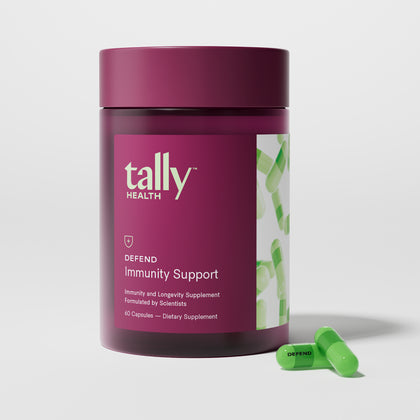
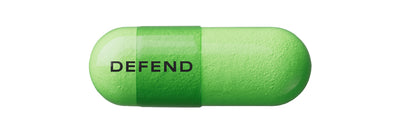
The mechanisms driving summer inflammation — oxidative stress, NF-κB activation, immune system overload from UV and heat — are precisely the pathways Tally's Defend is designed to support.
Defend combines a clinically studied blend of immune- and inflammaging-targeted ingredients:
Quercetin: A flavonoid with well-studied antioxidant and anti-inflammaging properties.
Vitamin D3: Beyond bone health, research suggests vitamin D plays a direct role in regulating immune responses and promoting immune resilience.
Zinc: An essential trace mineral that supports immune cell function and acts as a co-factor in antioxidant enzyme systems that neutralize the reactive oxygen species generated by UV radiation.
Vitamin C and beta-glucan: Natural ingredients with well-recognized links to overall immune health and functioning.
Defend won’t reverse your sunburn. But it's designed to support the immune and cellular systems that summer quietly stresses — and to help your body maintain the kind of baseline that supports healthy aging over the long term.
Does sun exposure cause inflammation inside the body, not just on the skin?
Yes. Repeated UV exposure — even below the threshold of a visible burn — elevates baseline systemic inflammation over time, not just local skin inflammation. UV radiation also generates reactive oxygen species (ROS) that damage cellular structures including mitochondria and DNA. When the antioxidant load is high enough to outpace the body's defenses, the result is oxidative stress, which is directly linked to the chronic, low-grade inflammatory state associated with biological aging.
How does summer sleep loss affect inflammation and biological age?
Research has found that even one week of sleeping six hours or less per night significantly elevates circulating levels of IL-6 and CRP, two well-established inflammatory markers. A separate analysis using UK Biobank data found that chronic short sleep was associated with higher biological age as measured by epigenetic clocks. Summer compounds this risk: extended daylight delays melatonin release, warm temperatures fragment sleep, and social schedules shift later — with many people accumulating 60–90 minutes less sleep per night from June through August.
Why is the combination of heat, alcohol, and poor sleep especially harmful for aging?
Each of these stressors independently activates NF-κB, a master transcription factor that functions as inflammation's "on switch." When multiple summer stressors occur simultaneously, NF-κB activation compounds, increasing inflammatory cytokine production. NF-κB also plays a role in cellular senescence — the process by which cells stop dividing and begin secreting more pro-inflammatory signals — contributing to what researchers call the senescence-associated secretory phenotype (SASP), a key mechanism linking lifestyle inflammation to accelerated biological aging.
References
Hu et al. Effect of Elevated Temperatures on Inflammatory Cytokine Release: An In Vitro and Population-Based Study. Environ Health (Wash) 2024.
Wang et al. Prolonged Humid Heat Triggers Systemic Inflammation and Stress Signaling: Fluid Intake Modulates NF-κB, p38, JNK2, and STAT3α Pathways. Int J Mol Sci 2025.
Leon and Helwig. Heat stroke: role of the systemic inflammatory response. J Appl Physiol (1985) 2010.
Salminen et al. Photoaging: UV radiation-induced inflammation and immunosuppression accelerate the aging process in the skin. Inflamm Res 2022.
Ciążyńska et al. Ultraviolet Radiation and Chronic Inflammation-Molecules and Mechanisms Involved in Skin Carcinogenesis: A Narrative Review. Life (Basel) 2021.
Veler. Sleep and Inflammation: Bidirectional Relationship. Sleep Med Clin 2023.